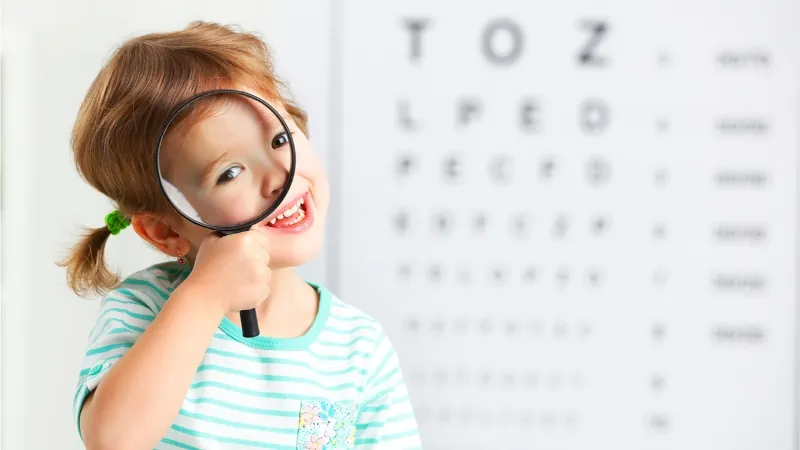
A paediatric eye examination starts with a vision screening, a simple test that shows us which children need a full eye examination. This screening can be carried out
- By the paediatrician
- By the family doctor
- By an ophthalmologist
According to the American Academy of Ophthalmology, the following schedule is recommended for vision screening in children.
Newborn
When examining a newborn baby’s eyes, a doctor from one of the specialties above can check
- The red reflex from the back of the eye (fundus)
- The normal response of the iris (pupil) to light.
A full eye examination with fundoscopy should be carried out
- In cases of prematurity
- When there are visible signs of eye disease
- When there is a family history of childhood eye disease
6 to 12 months
A second check can be carried out during the child’s first year of life. In addition to the tests above, it should include
- Assessment of eye movements
- Assessment for strabismus (squint) or orthophoria (straight eyes)
- Visual inspection of the eyes
3 to 5 years of age
This is the age at which the first major objective assessment of the child’s vision takes place. Some children are ready and cooperative enough for us to confirm their level of vision from the age of 3, while others need a little more time.
In this check we measure the child’s visual acuity (for example, whether they have 10/10 vision) in each eye separately. Most children of this age have a little hypermetropia (long-sightedness), but they can see normally both far and near, so they do not need corrective glasses.
If visual acuity is not at a satisfactory level, a refraction test is carried out, usually with eye drops.
At this age the child is also checked for
- Strabismus (squint)
- Amblyopia (lazy eye)
- Refractive errors (myopia, hypermetropia, astigmatism)
- Fundoscopy
- Colour vision
- Stereoscopic vision
5 years and older
After the age of five, and if an eye problem has appeared by then, the most important reason for a child to have an eye examination is to check for myopia. Of course, it is not the only one. The check for strabismus is repeated, and stereoscopic vision and colour vision are reassessed. In addition, a more detailed examination of the fundus can be carried out, since at this age cooperation is usually very good.
When should we ask for a specialist paediatric eye examination?
If we notice something in the child’s daily life that concerns us, it is wise to seek professional help. A specialist ophthalmologist can tell us whether our child sits close to the television out of habit or because they cannot see well. The paediatrician who looks after our child usually carries out the screening (deciding which child needs an eye examination promptly) and refers us accordingly based on the findings. What we want to avoid is the child’s learning or social development being held back by a problem that may be easy to treat, for example with glasses.
Questions about your case?
Dr. Skouteris will examine you at his practice in Neo Psychiko and explain your options.

Ophthalmic surgeon trained at the John Radcliffe University Hospital in Oxford and Fellow of the European Board of Ophthalmology (FEBO).
Full profileRelated articles
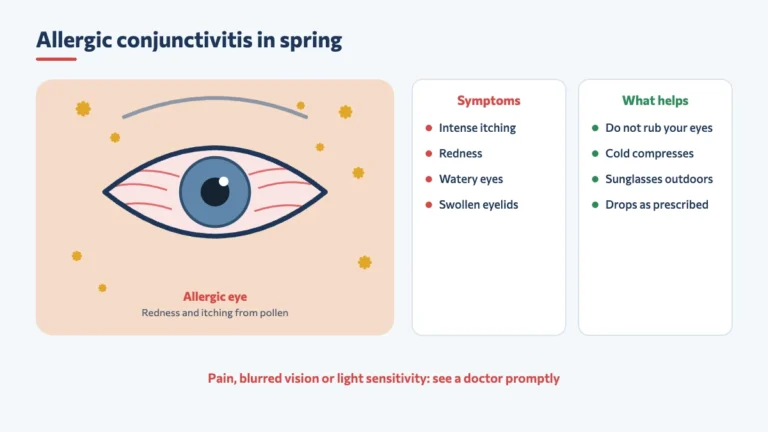
Allergic Conjunctivitis in Spring: Symptoms, Prevention and When to Worry
Itching, redness and watering in both eyes every spring? How to recognise allergic conjunctivitis, what helps prevent it and which signs need prompt examination.
Read the article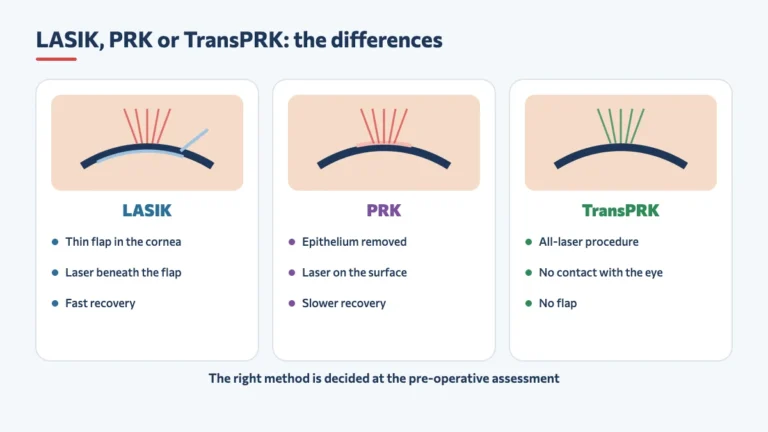
LASIK, PRK or TransPRK: Which Laser Eye Surgery Is Right for You?
The difference between LASIK, PRK and TransPRK, how long recovery takes and which criteria determine the right laser eye surgery for each eye.
Read the article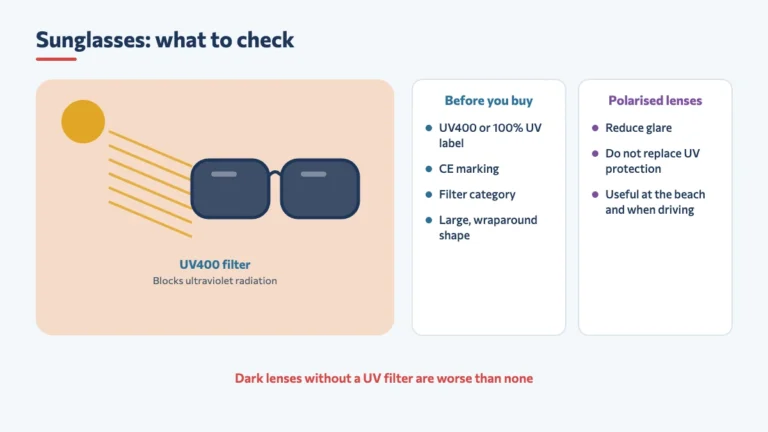
Sunglasses and Eye Protection: What to Check Before You Buy (Including for Children)
UV400, CE mark, filter category and polarised lenses: what to check before buying sunglasses for yourself and for your children.
Read the article