
Page contents
From an article by Dr Skouteris published in FZHN magazine.
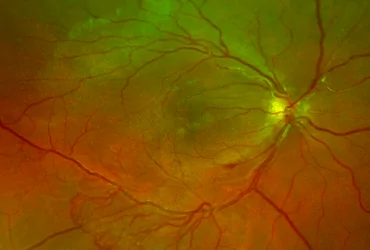
These days we hear the term macula more and more often, often in connection with macular degeneration and the fear of blindness. But what exactly is the macula and how does it affect our vision? The macula is the central part of the retina, the layer of the eye responsible for collecting light and turning it into an image. This central part is called the macula lutea and takes its name from the yellowish appearance it shows during fundoscopy, the standard examination of the back of the eye. The macula gives us our sharpest vision, that is the vision with the clearest image.
As one might expect, the macula is a particularly complex part of the eye, with a high demand for blood and intricate neural connections. This great complexity also makes it especially sensitive to age-related changes, in other words changes that lead to its degeneration and appear mainly in older people. This is why the official name of the disease is age-related macular degeneration. As mentioned, the main cause is age, but heredity has also been found to play an important role, since in some families it occurs much more often than in others.
What are the symptoms of macular degeneration?
The most common symptom is distortion of the image, so that straight lines look wavy. Many people report noticing parts of their home, such as windows or doors, looking bent. Another common symptom is difficulty making out fine detail. One positive aspect of this disease is that peripheral vision is never affected. It is the central part of vision that deteriorates, so tasks such as reading, even with reading glasses, are significantly affected.
Types
There are two types. The dry form is the most common; it usually progresses slowly and causes gradual loss of central vision. It usually takes several years to reach its final stage, in which there is a spot in the centre of the visual field where the patient cannot see. In the wet form, by contrast, progression is rapid, and the earlier the diagnosis, the better.
Is there a treatment?
For the wet form, which has the worse prognosis without treatment, with a rapid decline in vision, we are fortunate to have a very effective treatment available. Treatment is given with a type of medicine called anti-VEGF, which aims to reverse the course of the disease, stabilise the condition and, to a degree, improve vision. It involves injections of this agent into the eye at set intervals. The results of this treatment are excellent, provided that it is given with the right protocols, at the right time, and that medical help is sought relatively soon rather than months after the symptoms begin. Under these conditions, large multicentre studies have shown not only stabilisation but, in most cases, an improvement in visual acuity. The first period after symptoms appear is therefore critical: a correct diagnosis must be made, followed by prompt treatment with the right protocols.
Are intravitreal injections risky?
Every intervention on the human body carries some risks. Intravitreal injections also carry some risks, but these are quite small. Statistics show that the chance of developing a haemorrhage, an infection or a retinal detachment is less than 1 in 1,000 cases. Of course, the setting and the procedure followed during an intravitreal injection also play an important role. It is essential to keep the area completely sterile and to perform the injection itself in a way that maximises patient safety. It is the setting and the technique that ensure the safest outcome.
Do intravitreal injections hurt?
The answer to this question is simple: it depends on the anaesthesia we use. The injection can be made completely painless, but even with the lightest form of anaesthesia, anaesthetic eye drops alone, most of the time the patient feels no pain, or any pain is very slight. For people who are particularly sensitive, we can use a combination of anaesthetics so that the patient feels no pain at all.
Finally, another factor that can play an important role in the progression of the condition is diet. We now know from multicentre studies that people whose diet is rich in green vegetables and oily fish have up to 40% slower progression of macular degeneration.
Questions about your case?
Dr. Skouteris will examine you at his practice in Neo Psychiko and explain your options.

Ophthalmic surgeon trained at the John Radcliffe University Hospital in Oxford and Fellow of the European Board of Ophthalmology (FEBO).
Full profileRelated articles
Diabetic Maculopathy (Diabetic Macular Oedema)
Diabetic macular oedema is one of the conditions that affect the macula, a term many people have heard of nowadays because of…
Read the article
Aftercare Instructions after an Intravitreal Injection
Please follow the aftercare instructions below after your intravitreal injection to avoid a possible infection or other serious complication from the injection:…
Read the article
Protecting Your Eyes in Summer: The 3 Most Common Mistakes
Proper summer eye protection from solar radiation is extremely important. It is widely known how beneficial the sun can be for our…
Read the article