
What is a cataract?
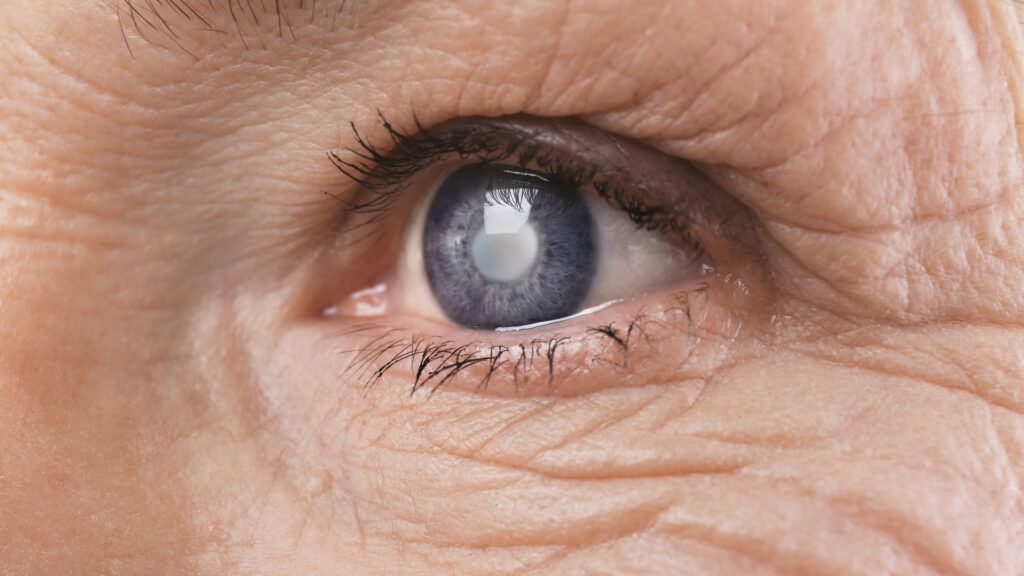
A cataract is the clouding of the crystalline lens of the eye, and cataract surgery is the only way to remove it. The crystalline lens sits just behind the iris, the coloured part of the eye. Throughout our lives this lens is normally clear, so that we have good, sharp vision. The clouding of this lens, which in most cases happens slowly and gradually, is called a cataract. Early diagnosis and seeking treatment can make a significant contribution to dealing with the symptoms of cataract effectively and painlessly.
Page contents
- What is a cataract?
- What causes cataracts?
- What are the symptoms of cataract?
- How is cataract treated? What is the right treatment?
- Can cataracts be prevented?
- Will I need glasses after cataract surgery?
- Which intraocular lens should I choose?
- How long does cataract surgery take?
- Is cataract surgery painful?
- When should you have cataract surgery?
- How safe is cataract surgery?
- What should I be careful about before surgery?
- Are there possible complications of cataract surgery?
- What is secondary cataract?
- Are there eye drops I will need to use?
- How long is recovery after cataract surgery? When does vision return?
- Which factors increase the risk of cataract?
- How much does cataract surgery cost? Are the prices affordable?
- Does EOPYY cover cataract surgery?
- In conclusion
- Frequently Asked Questions about Cataract Surgery
What causes cataracts?
The most common and widely known cause of cataract is age. Clouding of the eye’s natural lens usually progresses over time, and on average surgery is needed after the age of 65 to 70. Naturally, as time passes, the clouding of the natural lens becomes more pronounced, so the lens becomes less clear. In some cases, however, a cataract can seriously affect vision at a younger age as well. This is fairly rare, as we much more often see cataracts in older people.
Age may be a common cause of cataract, but it is not the only one. Cataracts can also develop in patients who take certain medicines. Not just any medicines, though, but those containing cortisone (in any form: skin creams, eye drops or tablets).
The causes do not stop there. Injuries to the eye area are an important factor in the development of what is known as traumatic cataract. A traumatic cataract needs prompt eye care, as further complications may follow if it is not treated in time.
Finally, there are several conditions in which clouding of the lens, that is, cataract, progresses faster than in the general population, the most important being diabetes. Patients with diabetes are several times more likely to develop cataract earlier than people without diabetes. It is therefore essential for anyone diagnosed with diabetes to visit an ophthalmologist, mainly so that the back of the eye can be checked with fundoscopy.
What are the symptoms of cataract?
A patient with a cataract does not feel pain, but experiences a gradual deterioration of their vision. The first symptoms of cataract are usually mild and gradually become more noticeable. The most common reason that makes someone think of visiting their ophthalmologist is “cloudy” vision: the feeling that, even with their glasses on, they do not see as well as they used to. This is why most people believe that the solution to their problem is new glasses with a different prescription, simply assuming that their myopia has increased.
With a cataract, however, this is not the case. The reduced vision is not due to a change in the glasses prescription but to the gradual clouding of the lens of the eye, a condition that cannot be improved or corrected with glasses. As the symptoms gradually increase over time, the patient may begin to notice sensitivity to light, faded colours and a general dimness of the image at all times of the day.
A second, very common symptom is blurred vision at night, especially when driving at night. Many patients put this symptom down to tiredness after a hard day and a lot of screen time. However, this blurring is particularly noticeable with oncoming cars, whose headlights cause a marked reduction in vision. Outlines look blurred, and the patient cannot fully make out shapes and distances.
We quite often hear from our patients that they have gradually cut down on night driving, without mentioning any particular reason. In most of these cases the reason is the insecurity caused by reduced vision while driving, as they are no longer able to drive as they used to.
How is cataract treated? What is the right treatment?
The major advances in technology in recent years have also contributed to the treatment of cataract, making it safer and more successful than ever. Cataract can now be treated with an operation that replaces the cloudy cataractous lens with a new, perfectly clear one, which has the important advantage that it will never become cloudy again, so we can now offer a permanent solution to the problem. The lens used by Dr. Skouteris is the one that the majority of ophthalmologists worldwide consider the best possible lens for the treatment of cataract, even in advanced stages.
But how is the operation performed? It is carried out with a machine for phacoemulsification, which breaks up and at the same time aspirates the lens with the cataract, so that the new lens can be placed in its position. Replacing the lens is a completely safe and minimally traumatic procedure that causes the patient no discomfort during the operation.
Laser procedures have become widely known and effective in recent years, and in this case too the operation is carried out with a special laser machine whose action is precisely targeted, without extending to the surrounding tissues. The technique we use is the most advanced in the world, and the incision made is the smallest possible. This increases safety and at the same time shortens recovery after surgery, allowing the patient to return quickly to their daily activities.
Dr. Skouteris received specialist training at Oxford University Hospital, where the operation is performed in exactly the same way.
Book an appointment with the doctor
An examination and clear advice on your case at our practice in Neo Psychiko.
Can cataracts be prevented?
There are ways of preventing every condition, and cataract is no exception. Mobile phones, computers and tablets have each become firmly established in our daily lives. If you consider that you can now do almost anything from your mobile phone, including all your transactions, you realise how many hours a day we spend in front of a screen. Frequent exposure to screens therefore significantly paves the way for cataract. Limiting screen use and reducing screen brightness can help considerably in preventing it.
In recent years experts have been saying that every summer the sun becomes more and more dangerous, and not only for your skin. So, to protect your eyes from sun exposure, regular use of sunglasses is essential (not only in summer, but in winter too).
Vitamin C can help significantly in preventing cataract. Vitamin C is found in oranges, and if you do not like them, you can get the vitamins you need from your pharmacy.
A habit that many people have taken up is smoking. One of the problems smoking can cause is cataract. The good news for anyone who decides to give up this habit is that it significantly reduces the risk of developing cataract.
However, the factors that contribute to cataract formation are numerous and not fully understood by the scientific community. In the early stages, before the condition progresses, most patients will see a noticeable improvement with glasses. Once the problem worsens, the only solution is surgery to remove the cataract.
Will I need glasses after cataract surgery?
The main aim of cataract surgery is to restore vision without the need for special glasses. As far as distance vision is concerned, in the vast majority of cases patients will not need glasses. By distance we mean any distance greater than one metre.
As for near vision, we can reduce or even eliminate the need for glasses under certain conditions. These conditions depend on the refractive power of each eye, as well as on the patient’s demands and daily needs.
Before cataract surgery we always allow plenty of time to discuss the choice of lens and, therefore, the need for glasses after surgery. However, the only glasses anyone will need to wear are sunglasses, which will help protect against the cataract returning or the development of other eye conditions.
Which intraocular lens should I choose?
During surgery, the cloudy natural lens is replaced with an artificial intraocular lens (IOL), which stays in the eye permanently. The choice is not the same for everyone: it depends on your visual needs in everyday life, on whether you have astigmatism and on the health of the rest of the eye, such as the macula and the optic nerve.
| Type of intraocular lens | What it offers | What you should know |
|---|---|---|
| Monofocal | Clear vision at one distance, usually for distance | Glasses are usually needed for reading and close work |
| Multifocal (trifocal) | Vision at distance, intermediate and near | Possible halos around lights at night and slightly reduced contrast sensitivity; not suitable for every eye |
| EDOF (extended depth of focus) | Good vision at distance and intermediate range, such as a computer screen | Fewer visual side effects than a multifocal lens; glasses may be needed for fine close work |
| Toric | Corrects corneal astigmatism at the same time | Available in monofocal, multifocal or EDOF versions; requires precise measurements and correct alignment during implantation |
A multifocal or EDOF intraocular lens can significantly reduce dependence on glasses, but it is not usually recommended when there is also macular degeneration, advanced glaucoma or another condition that limits the quality of vision. The final recommendation is made after the pre-operative measurements, such as biometry and corneal topography, and a discussion about your lifestyle. You will find more information about options that also correct near vision on the page about presbyopia-correcting lens implants.
How long does cataract surgery take?
With modern technology, the time needed for cataract treatment has been reduced significantly. On average, cataract surgery takes about 15 minutes. There are cases in which the operation can be completed much faster, but there may also be cases where complications arise that delay the procedure. The operation is always completed without haste, with the aim of achieving the best possible result, and healing today can be quicker and more comfortable than ever.
Is cataract surgery painful?
With the modern methods available to us, cataract surgery is in no way painful. This is largely due to the targeted action of the laser combined with anaesthesia. Anaesthesia is usually local and, very rarely, general.
We always make sure there is adequate pain relief, and the only thing you feel is a sensation of mild pressure in the area of the operation. Although in most cases the procedure is carried out under local anaesthesia, there is always an anaesthetist in our team who looks after the patient’s safety throughout and ensures that pain relief is adequate.
General anaesthesia is used only if it is considered absolutely necessary in a particular case, and always by a specialist anaesthetist. Each patient’s needs are discussed in detail before the operation.
When should you have cataract surgery?
The decision to go ahead with surgery belongs solely to the patient. The main aims of cataract surgery are to improve vision, relieve unpleasant symptoms and improve the person’s overall quality of life.
When vision is poor, the patient’s daily life is affected enormously, as most of our activities today require good vision. Clinical studies have even shown that cataract surgery has a particularly positive effect on people’s mental health, as it can restore vision to how it was usually many years earlier, allowing them to return to most of the favourite activities they had given up because of the cataract.
It is important to know that the sooner cataract surgery is carried out after diagnosis, the better the results, while if the patient neglects it for a long time, the risk of complications is greater.
Book an appointment with the doctor
An examination and clear advice on your case at our practice in Neo Psychiko.
How safe is cataract surgery?
Cataract surgery is one of the safest operations on the human body. Of the operations Dr. Skouteris has performed in Greece, there is not a single patient whose vision did not improve compared with before surgery, while internationally the likelihood of needing a repeat operation is less than 1 in 1,000 cases.
What should I be careful about before surgery?
Before the operation, you should fast for at least six hours, and on the day you should wear loose, comfortable clothes. Patients taking treatment for diabetes may need to adjust their dose on the day before surgery. Detailed information is given to each patient after the examination, the medical history and an assessment of the needs of each case.
Are there possible complications of cataract surgery?
Cataract surgery is successful in the vast majority of cases, with the patient’s vision restored quickly. The modern methods used have minimised the risks during surgery as well as complications afterwards.
Temporary complications such as a mild infection, clouding of the lens capsule after cataract surgery or vitreous prolapse are very rare and treatable. In extremely rare cases, and if they are not treated in time, they can lead to temporary loss of vision. The patient should contact their doctor immediately if they notice any unusual symptom after the operation, so that the necessary medical steps can be taken to treat the complication straight away.
What is secondary cataract?
Some patients complain of new clouding of their vision some time after the operation. This is a harmless condition (posterior capsule opacification) that the patient need not worry about, and it can now be treated with laser in complete safety. Your doctor will explain in detail all the methods available to restore your vision, with the aim of achieving the best possible result.
Are there eye drops I will need to use?
Yes! For a certain period after the operation, you will need to use special eye drops to speed up healing and prevent dry eye. Your doctor will give you detailed information on which drops to use and when, depending on your situation.
How long is recovery after cataract surgery? When does vision return?
Vision after cataract surgery begins to return gradually in the first hours after the operation. The patient notices a significant difference on the morning of the next day, and by the end of the first week recovery is usually almost complete. Of course, recovery may take longer if the cataract has been neglected for a long time, or if other eye conditions are also present. Patients can return to work 2 days after surgery.
Any special care needed for the eye after the operation ends at the end of the first week. Strenuous exercise should be avoided for about the same period. With the modern way we perform the operation, the patient can lift weights (up to about 5 kilos) even in the first days after surgery, and bending down is not forbidden. All restrictions end on the seventh day after the operation.
Which factors increase the risk of cataract?
In addition to those mentioned above, a number of diseases and medical conditions increase the likelihood of developing cataract. Apart from age and diabetes, the most common risk factors for cataract are:
- Increased exposure to sunlight without sunglasses
- Heavy daily smoking
- Obesity
- High blood pressure (hypertension)
- Frequent consumption of large amounts of alcohol
- A history of intraocular inflammation
How much does cataract surgery cost? Are the prices affordable?
Due to restrictions set by the Medical Association, the exact cost cannot be stated publicly. However, we can easily answer you with a personal message or a phone call. We are at your disposal for any clarification or further information about the procedure and the cost of cataract surgery.
Does EOPYY cover cataract surgery?
Cataract surgery is included in the benefits of EOPYY, the Greek national health insurer, for those insured. The extent of coverage, however, depends on where the operation takes place and on the type of intraocular lens chosen.
- Public hospitals: the operation is covered under the National Health System (ESY), with the waiting times that apply at each hospital.
- Private clinics contracted with EOPYY: EOPYY reimburses a fixed amount for the hospital stay. The clinic may charge the difference, while the surgeon’s fee in the private sector is usually dealt with separately.
- Intraocular lens: the standard monofocal intraocular lens is usually covered. For toric, multifocal or EDOF lenses, the patient as a rule pays the difference.
- Private insurance: most health insurance policies cover the operation as day surgery, with terms that differ in terms of excess, network of clinics and cover for premium lenses. It is a good idea to request approval from your insurance company before surgery.
In every case, a medical referral and the documents required by each provider are needed, and it is often possible to combine EOPYY with private insurance. Coverage details change, so ask the clinic about your own case.
In conclusion
Cataract is an extremely common problem that affects a large proportion of people, especially in older age. As an indication, it is estimated that one in two people over the age of eighty will experience clouding of their vision. Treatment is carried out with the main aim of improving vision and enhancing the patient’s quality of life. If you are not experiencing any problem and are happy with your vision when wearing your glasses, you should discuss this with your doctor before going ahead with treatment.
Overall, cataract surgery is a complex procedure that requires highly specialised training and many years of experience to be completed successfully. Its results, however, when it is performed by an experienced surgeon and a reliable surgical team, are excellent, both in terms of restoring visual acuity and in terms of the quality of vision. With the latest technology at our disposal, we can offer our patients the highest possible levels of safety and effectiveness.
Frequently Asked Questions about Cataract Surgery
Does EOPYY cover cataract surgery?
Cataract surgery is covered by EOPYY in public hospitals and, with a fixed reimbursement, in contracted private clinics, where there may be an additional charge. The standard monofocal intraocular lens is usually covered, while for premium lenses the patient pays the difference. Coverage details change, so ask the clinic about your own case.
Will I need glasses after cataract surgery?
It depends on the intraocular lens. With a monofocal lens set for distance, most people need glasses for reading. Multifocal and EDOF lenses significantly reduce dependence on glasses, although some patients still need them for very fine work. The final measurement for glasses is usually done a few weeks after surgery.
How much does treatment for secondary cataract (YAG laser) cost?
The cost of YAG laser treatment depends on whether one or both eyes are treated, on your insurance cover and on the tests that will be needed. The procedure is done at the clinic, takes a few minutes and does not require a hospital stay. You will be informed of the exact cost after the examination.
Can both eyes be operated on the same day?
Surgery is usually performed on each eye separately, a few days or weeks apart, so that the result in the first eye can be assessed before the second. In selected cases, surgery on both eyes on the same day can be discussed. The decision is made individually, based on the health of your eyes and your needs.
Medically reviewed by: Dr. Vasileios Skouteris MD, FEBO