The role of eyelid hygiene in modern ophthalmology
Introduction
Blepharitis and dry eye are among the conditions in which eye drops alone are often not enough. In modern ophthalmic practice, eye drops are a key tool for treating a wide range of conditions of the ocular surface. Anti-allergy, anti-inflammatory, lubricating or antibiotic preparations are prescribed every day to improve symptoms and restore the patient’s comfort.
However, clinical experience often shows that, despite the correct choice and use of eye drops, symptoms persist, relapse or return within a short time. This leads both patients and doctors to ask:
Why is medication alone not always enough?
The answer often lies in an anatomical and functional structure that remains underestimated: the eyelids
The eyelids play a decisive role in the stability of the ocular surface and the quality of the tear film, which explains why conditions such as blepharitis and dry eye often persist when they are treated with eye drops alone.
Eye drops and their limits
Eye drops are designed to act mainly:
- on the surface of the cornea,
- on the conjunctiva,
- on the tear film.
They are not designed to:
- clean the eyelid margin,
- remove allergens from the eyelashes,
- regulate the function of the meibomian glands,
- reduce the bacterial load of the eyelids.
This means that, in conditions where the eyelid is a key factor in the disease process, eye drops treat the symptom but not the cause.
The eyelid as an active regulator of the ocular surface
The eyelids are not passive structures. They play an active part in:
- spreading tears with every blink,
- the function of the lipid layer,
- the mechanical protection of the cornea,
- regulating the microbial balance of the area.
The meibomian glands, located within the eyelids, produce the lipid layer of the tear film. Their dysfunction leads to increased tear evaporation and is a key mechanism of dry eye.
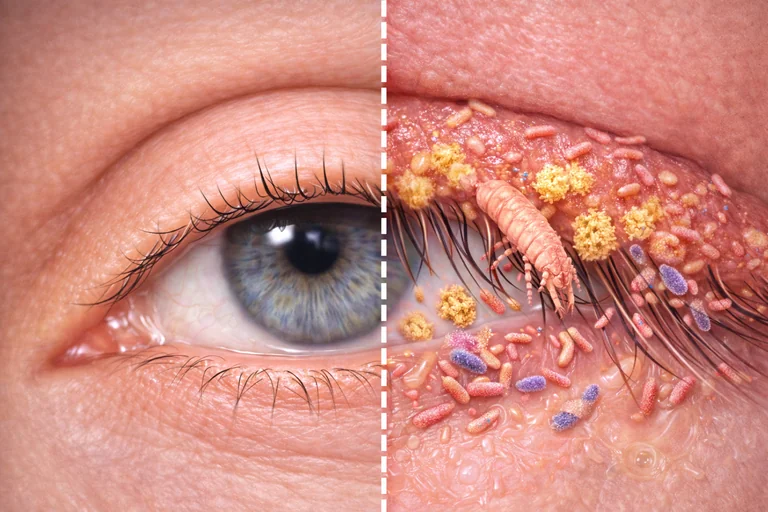
When the eyelids become inflamed or burdened by bacteria, Demodex mites, allergens or pollutants, the overall balance of the ocular surface is disrupted.
Chronic inflammation: the common denominator
Blepharitis
Blepharitis is one of the most common chronic conditions of the eyelids. It is characterised by:
- redness,
- flaking,
- a burning sensation,
- itching,
- fluctuations in the quality of vision
- and in some cases it leads to a chalazion
Even when eye drops temporarily reduce the symptoms, a lack of systematic eyelid hygiene often leads to relapses.
Dry eye
Dry eye is not always caused by reduced tear production. In a large proportion of patients, the cause is a poor-quality lipid layer due to meibomian gland dysfunction.
In these cases, using artificial tears alone offers limited and temporary relief, as long as eyelid function is not restored.
Allergic conjunctivitis
In allergic conjunctivitis, allergens are not confined to the conjunctiva. They remain:
- on the eyelid margin,
- on the eyelashes,
- on the skin around the eyes.
Anti-allergy eye drops reduce the reaction, but without cleaning the eyelids, allergens continue to trigger the cycle of inflammation.
The contribution of Dermophthalmology
Dermophthalmology highlights the functional continuity between the skin and the ocular surface.
In this context, the eyelid is treated:
- not only as an eye structure,
- but also as specialised skin with its own care needs.
This approach bridges dermatology and ophthalmology, placing emphasis on long-term prevention and the stabilisation of the ocular surface.
Eyelid hygiene as the foundation of treatment
Systematic hygiene is a key pillar of the modern management of chronic ocular surface conditions.
Daily cleansing
Daily cleansing of the eyelids with gentle, specialised products, such as Naviblef foam, and lukewarm water helps:
- to remove bacteria and allergens,
- to reduce the inflammatory load,
- to stabilise eyelid function.
Warm compresses
Applying controlled heat to the eyelids helps to liquefy the thick secretions of the meibomian glands and supports their natural decongestion. This improves the quality of the lipid layer of the tears and reduces evaporation of the tear film.
Beyond their therapeutic effect, warm compresses play an important preventive role, as they:
- reduce the likelihood of a chalazion coming back,
- limit relapses of blepharitis,
- contribute to the stability of the ocular surface and to the overall management of dry eye, especially when combined with artificial tears such as Visionlux Plus, Thealoz Duo, Navitae Plus and Flora Vision Spray, always according to the patient’s needs,
- give the eyes a feeling of rest and relaxation, especially after long hours of screen use.
- improve the quality and clarity of vision
Ophthalmogen EYE10 single-use self-heating compresses provide a stable, controlled temperature for about 20 minutes without the need for an external heat source, making the process safe, easy and repeatable in the patient’s daily routine.
Regular use of warm compresses is the ideal basis before eyelid massage and the rest of the hygiene routine, enhancing the overall effectiveness of the treatment protocol.
Eyelid massage: prevention and therapeutic support
After applying warm compresses, gentle eyelid massage with Ophthalmogen gel plays a particularly important role. The massage is applied with soft, circular movements on the eyelids and the area around the eyes and helps both preventively, by avoiding new blockages of the meibomian glands, and therapeutically, by decongesting eyelids that are already affected.
The combined action of heat and mechanical stimulation boosts the microcirculation of the area, helps to clear the inflammatory load and supports the normal function of the eyelids. At the same time, improving local blood flow through massage may gradually help to reduce discolouration under the eyes (dark circles), which is often linked to chronic inflammation, congestion and fatigue of the area around the eyes.
For prevention, the massage can be done daily, while during periods of marked inflammation or relapse it can be repeated 2 to 3 times a day, always after cleansing and, ideally, after using warm compresses.
Eyelid care and hydration
Daily care of the eyelid area with products from the Ophthalmogen range helps to reduce inflammation and improve the function of the eyelids and the ocular surface.
During the day, spraying the eyelids and eyelashes with Ophthalmogen Spray helps to remove irritants and allergens and to keep the eyes comfortable, especially in environments with dust, pollen or long hours of screen use.
In addition, gentle spraying while working at a screen appears to support the natural blink rate, which drops significantly during prolonged concentration on a computer, thereby contributing to the stability of the tear film and reducing visual fatigue. The spray is easy to apply with the eyes closed, even while working at a computer.
When meibomian gland blockage is established and symptoms persist despite proper home care, medical treatment in the clinic can significantly speed up the recovery of eyelid and ocular surface function.
Meibomian gland expression: medical treatment in the clinic
In cases where chronic eyelid inflammation and meibomian gland dysfunction persist despite proper home care, meibomian gland expression can play an important role. This is a medical procedure carried out by the ophthalmologist in the clinic.
The procedure is ideally carried out with specially designed eyelid instruments, such as Ophthalmogen’s MeiboEvacuators, which allow targeted, controlled and safe decongestion of the glands. Ophthalmogen specialises scientifically in the field of eyelids and eyelashes, which is reflected in the design of instruments adapted to the delicate anatomy of the area.
Benefits of meibomian gland expression:
- immediate removal of thick, obstructive secretions,
- improved quality of the lipid layer of the tears,
- reduced evaporation of the tear film,
- relief from symptoms of dry eye, burning and a feeling of heaviness,
- a better response both to eye drops and to systematic eyelid hygiene.
Expression works alongside heat, massage, eye drops and daily cleansing; it does not replace home care but strengthens it. When carried out at the right time and in suitably selected patients, it can make a real contribution to the long-term stabilisation of the ocular surface and to fewer relapses.
A combined approach: not eye drops or hygiene, but both
The modern management of ocular surface conditions is not about replacing eye drops, but about combining them correctly with systematic eyelid care.
Artificial tears:
- treat the symptom.
Eyelid hygiene:
- treats the underlying inflammation.
Combining them leads to:
- a better response,
- fewer relapses,
- long-term stability.
Conclusion
Eye drops are an essential tool in modern ophthalmology, but on their own they are not enough for chronic ocular surface conditions. Understanding the role of the eyelids and including daily eyelid hygiene in the treatment strategy is a key step towards the effective, long-term management of conditions such as blepharitis, dry eye and allergic conjunctivitis.
In everyday practice, when eyelid hygiene becomes a routine, relapses decrease and the need to change eye drops frequently is reduced, leading to more stable and lasting eye comfort.
Author note: co-authorship
This article is a scientific collaboration between ophthalmic surgeon Dr. Skouteris and the scientific team of Dermophthalmology.
Dermophthalmology is an emerging interdisciplinary field that studies the functional relationship between the skin of the eyelids, the eyelashes, the meibomian glands and the ocular surface, highlighting the role of daily eyelid hygiene in the stability of the tear film and the long-term health of the eyes.
Its approach is promoted internationally by the World Organization of Dermophthalmology (WOD), a scientific organisation that brings together ophthalmologists and dermatologists with the aim of improving prevention, education and care of the ocular surface. The Dermophthalmology approach contributes to a better understanding of conditions such as blepharitis, dry eye and allergic conjunctivitis.
Questions about your case?
Dr. Skouteris will examine you at his practice in Neo Psychiko and explain your options.

Ophthalmic surgeon trained at the John Radcliffe University Hospital in Oxford and Fellow of the European Board of Ophthalmology (FEBO).
Full profileRelated articles
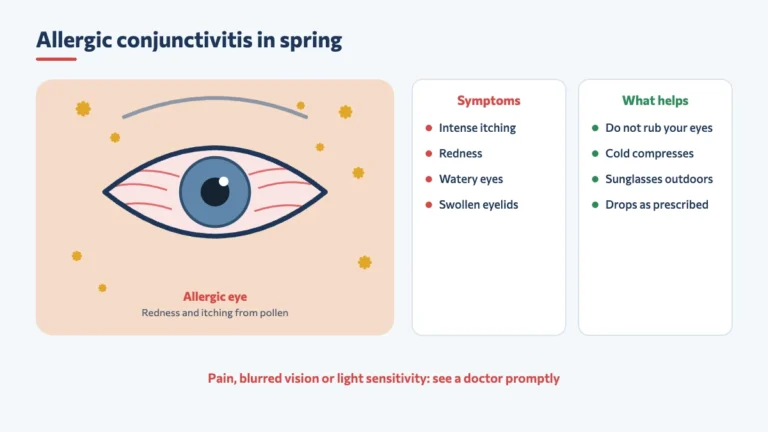
Allergic Conjunctivitis in Spring: Symptoms, Prevention and When to Worry
Itching, redness and watering in both eyes every spring? How to recognise allergic conjunctivitis, what helps prevent it and which signs need prompt examination.
Read the article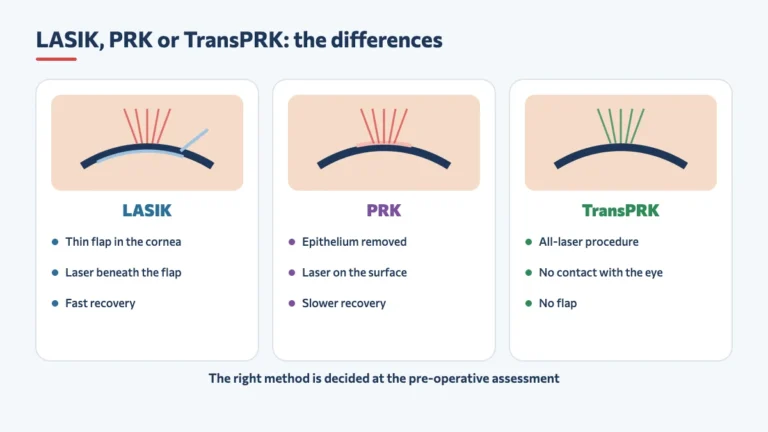
LASIK, PRK or TransPRK: Which Laser Eye Surgery Is Right for You?
The difference between LASIK, PRK and TransPRK, how long recovery takes and which criteria determine the right laser eye surgery for each eye.
Read the article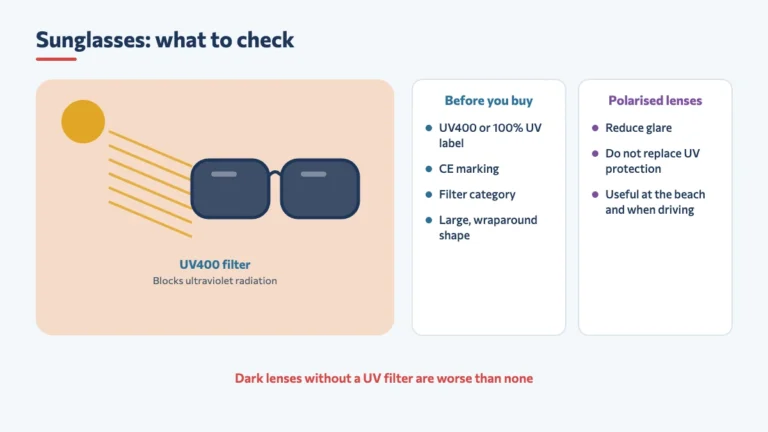
Sunglasses and Eye Protection: What to Check Before You Buy (Including for Children)
UV400, CE mark, filter category and polarised lenses: what to check before buying sunglasses for yourself and for your children.
Read the article