Page contents
“What should I watch out for now that I have macular degeneration?” is one of the first questions people ask after being diagnosed. Living with macular degeneration comes down to a few key things: regular self-checks with the Amsler grid, stopping smoking, a diet rich in green vegetables and fish, keeping to your appointments and treatments, and contacting your doctor straight away about any change in your vision.
Why does everyday life matter?
Age-related macular degeneration affects the centre of the retina, the area we use for reading, recognising faces and seeing fine detail. Side (peripheral) vision is usually preserved. There are two forms: dry AMD, which progresses slowly, and wet AMD, in which abnormal blood vessels grow and vision can drop within a few weeks. The dry form can turn into the wet form, so staying alert is an everyday matter, not just something for the day of your appointment.
A diagnosis often brings anxiety. It helps to know that, with proper monitoring and timely treatment when needed, many people keep useful vision and their independence for years.
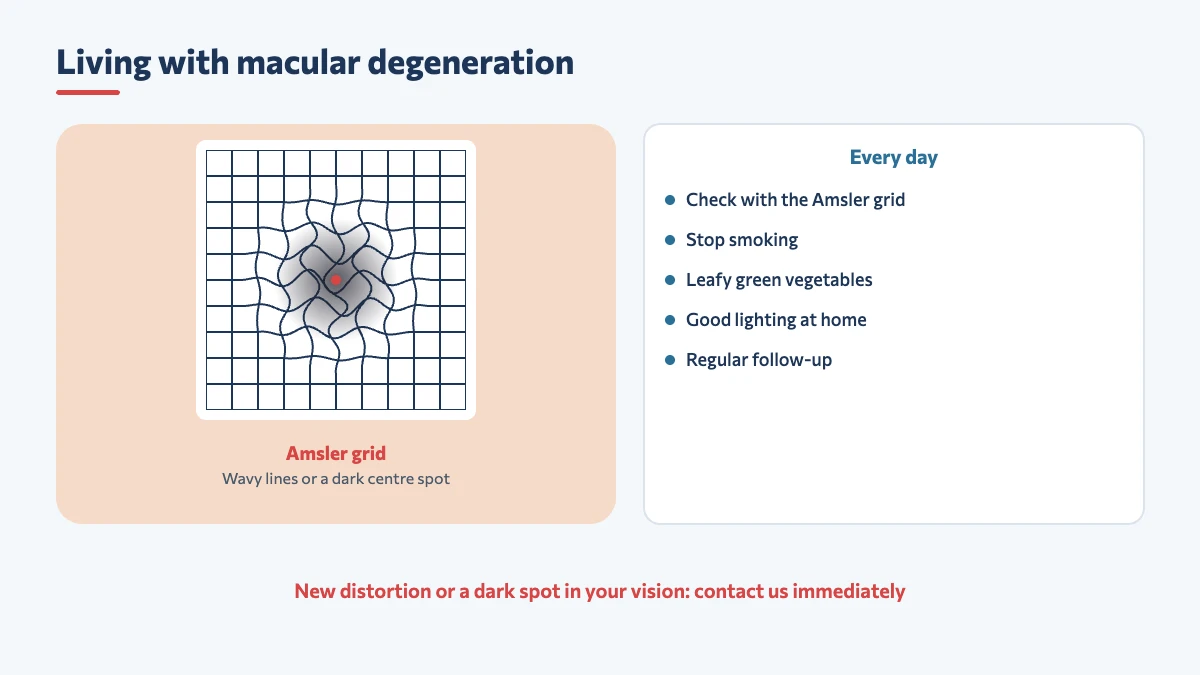
The Amsler grid: the simplest self-check
The Amsler grid is a square of straight horizontal and vertical lines with a dot in the centre. It helps you notice early any changes that may mean the disease has become active.
- Hang it somewhere well lit, for example on the fridge door, at reading distance.
- Wear your reading glasses, if you use them.
- Cover one eye and look steadily at the central dot.
- Check whether all the lines are straight and whether you can see all the squares.
- Repeat with the other eye.
Do the check as often as your doctor has advised, usually daily or a few times a week. Wavy or broken lines, a blurred or dark area that was not there before, or any change compared with your previous check needs prompt contact with the clinic, not a wait until your next scheduled appointment. Checking each eye separately is essential, because with both eyes open the good eye “covers up” the problem in the other.
Diet for macular degeneration
No food cures macular degeneration. However, observational studies link an eating pattern rich in plant foods and fish, such as the Mediterranean diet, with a lower risk of the disease progressing.
| Food group | Examples | What it provides |
|---|---|---|
| Green leafy vegetables | Spinach, kale, wild greens, lettuce | Lutein and zeaxanthin, pigments found naturally in the macula |
| Oily fish | Sardines, mackerel, anchovies, salmon | Omega-3 fatty acids |
| Brightly coloured fruit and vegetables | Oranges, peppers, sweetcorn, pumpkin | Vitamin C and carotenoids |
| Nuts and seeds | Almonds, walnuts, sunflower seeds | Vitamin E |
| Pulses and eggs | Lentils, chickpeas, eggs | Zinc, and lutein from the yolk |
Limit processed foods, saturated fat and sugar, and keep to a healthy weight. Good control of blood pressure and cholesterol also supports the health of the blood vessels in the eye.
AREDS2-type supplements: who are they for?
The large AREDS and AREDS2 studies by the US National Eye Institute showed that a specific combination of vitamins C and E, zinc, copper, lutein and zeaxanthin reduces the risk of progression to advanced disease. The benefit, however, applies to particular stages: patients with intermediate AMD or with advanced AMD in one eye. In early AMD, or in people without the disease, the data show no benefit.
Supplements do not reverse the damage and do not replace treatment. They should only be started on your doctor’s advice, after the stage has been assessed with an examination and OCT, and after checking for possible interactions with other medicines you take. Older formulations containing beta-carotene are not suitable for smokers or former smokers.
Smoking: the most important factor you can change
Smoking significantly increases the risk of developing macular degeneration and of it getting worse. Stopping helps at any age and at any stage of the disease. If you are finding it hard, ask your doctor or a stop-smoking clinic for help. Avoid passive smoking too.
Monitoring and treatment
Regular monitoring with optical coherence tomography (OCT) shows changes in the retina before you even notice them. In wet AMD, intravitreal injections are the main treatment. How well they work depends largely on consistency: delays, or stopping without medical advice, can lead to vision loss that cannot be recovered. Keep a diary of your appointments and let the clinic know in good time if you need to change a date.
Exercise, medicines and organisation
Regular physical activity, such as a daily walk, supports cardiovascular health, which is also linked to the health of the retina. Always tell your ophthalmologist about the medicines you take, especially anticoagulants, and about any new health problems. If you live alone, arrange with your family an easy way to keep track of appointments and to have someone accompany you when the drops or the injection temporarily blur your vision.
Practical adjustments at home and when out
- Lighting: bright, even light where you read or cook. A desk lamp with an adjustable arm that lights the page helps more than a ceiling light.
- Contrast: a dark plate for light-coloured food, coloured tape along the edges of steps, and light switches in a colour that stands out from the wall.
- Magnification: magnifying glasses, large text on your phone and tablet, and text-to-speech features.
- Fall prevention: remove rugs and cables from hallways and keep walkways around the house clear.
- Sun: sunglasses with full UV protection and a hat reduce glare and make vision outdoors more comfortable.
- Driving: talk openly with your doctor about whether your vision meets the safety standards, especially for driving at night.
Low vision aids, fitted by a specialist, can make a big difference to reading and independence. Reading and screens do not harm the macula, so there is no need to give up activities you enjoy.
Seeing things that are not there: Charles Bonnet syndrome
Some people with significant vision loss see shapes, patterns or even faces that are not there. This is Charles Bonnet syndrome, which is caused by the loss of vision and not by mental illness or dementia. Talk to your doctor about it, as the explanation on its own often eases anxiety.
When to contact your ophthalmologist straight away
- New distortion of straight lines or a change on the Amsler grid.
- A new dark or blurred spot in the centre of your vision.
- A sudden drop in vision in one eye.
- Pain, increasing redness or reduced vision in the days after an injection. See also our aftercare instructions following an intravitreal injection.
Proper monitoring changes the course of the disease, as we also explain in our article on whether blindness from macular degeneration can be avoided.
For regular monitoring, or if you have noticed a change in your vision, book an appointment at our clinic in Neo Psychiko, Athens.
Frequently Asked Questions
Will I lose my sight completely from macular degeneration?
Macular degeneration affects central vision, while peripheral vision is usually preserved, so it rarely leads to total blindness. It can, however, make reading, driving and recognising faces much harder. Early diagnosis, treatment of the wet form and consistent monitoring help many patients keep useful vision for years.
Should I take eye vitamins if I have dry macular degeneration?
It depends on the stage. AREDS2-type supplements have shown benefit in intermediate AMD or when there is advanced disease in one eye, not in the very early stages. They are not suitable for everyone and may interact with other medicines. Your ophthalmologist will tell you whether you need them after assessing the stage with an examination and OCT.
Can I read and use screens without my vision getting worse?
Yes. Reading, television and screens do not strain the macula and do not speed up macular degeneration. On the contrary, keeping up your activities is important for your quality of life. Use good lighting, larger text and high-contrast settings on your devices so that you tire less.
Are my children at risk of developing macular degeneration?
A family history increases the risk, but it does not make it certain. First-degree relatives should have an eye examination with a dilated fundus check from around the age of 50, or earlier if their doctor advises it. Not smoking, a healthy diet and protection from strong sunlight are sensible preventive measures for the whole family.
Questions about your case?
Dr. Skouteris will examine you at his practice in Neo Psychiko and explain your options.

Ophthalmic surgeon trained at the John Radcliffe University Hospital in Oxford and Fellow of the European Board of Ophthalmology (FEBO).
Full profileRelated articles
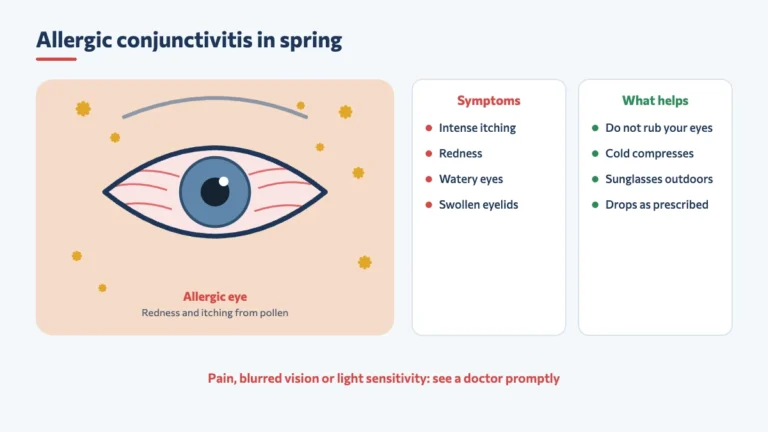
Allergic Conjunctivitis in Spring: Symptoms, Prevention and When to Worry
Itching, redness and watering in both eyes every spring? How to recognise allergic conjunctivitis, what helps prevent it and which signs need prompt examination.
Read the article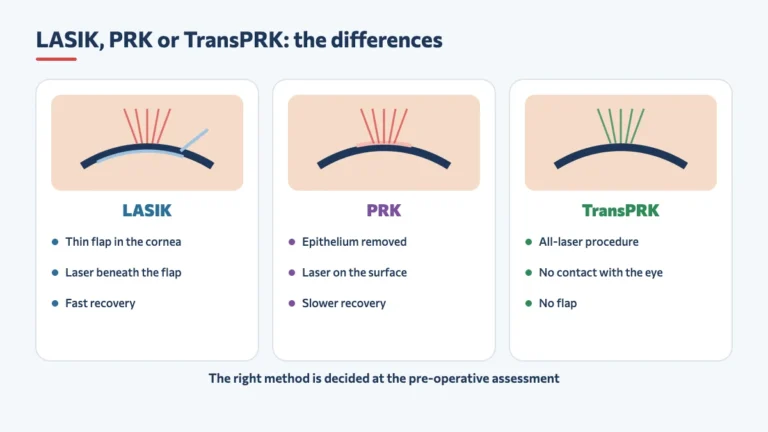
LASIK, PRK or TransPRK: Which Laser Eye Surgery Is Right for You?
The difference between LASIK, PRK and TransPRK, how long recovery takes and which criteria determine the right laser eye surgery for each eye.
Read the article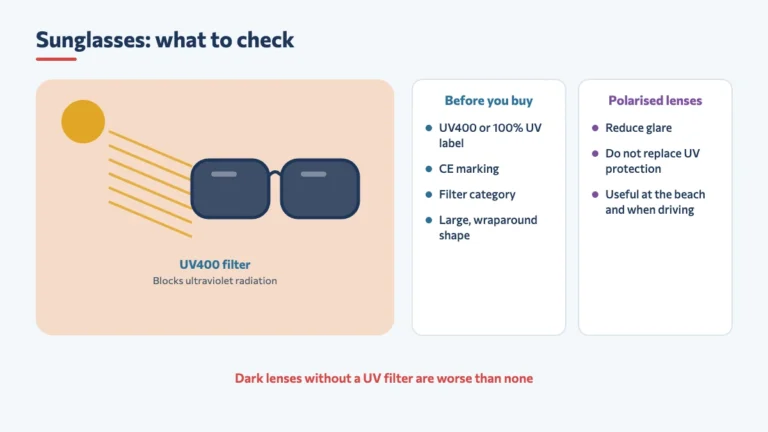
Sunglasses and Eye Protection: What to Check Before You Buy (Including for Children)
UV400, CE mark, filter category and polarised lenses: what to check before buying sunglasses for yourself and for your children.
Read the article