Page contents
- What Is Thyroid Eye Disease?
- Symptoms of Thyroid Eye Disease
- The Two Phases of the Disease
- What Makes It Worse
- Diagnosis
- Treatment of Thyroid Eye Disease
- The Psychological Burden
- I Have a Thyroid Condition. When Should I Have My Eyes Checked?
- Book an Appointment
- Frequently Asked Questions about Thyroid Eye Disease
The thyroid affects the eyes through an autoimmune condition called thyroid eye disease (TED), also known as Graves’ orbitopathy or Graves’ ophthalmopathy. The immune system, which has turned against the thyroid, also attacks the tissues behind the eyes, causing swelling, bulging eyes, retracted eyelids, dryness and, in more severe forms, double vision. It occurs mainly in Graves’ disease, that is, autoimmune hyperthyroidism. In most people it is mild and settles, but it needs monitoring by an ophthalmologist, because in a small proportion of patients it threatens sight.
What Is Thyroid Eye Disease?
In Graves’ disease the body produces antibodies that stimulate the thyroid to overwork. The target of these antibodies, a receptor on the surface of cells, is not found only in the thyroid. It is also present on the connective tissue and fat cells inside the orbit, the bony cavity that houses the eye. When the antibodies and immune cells reach it, they cause inflammation. The muscles that move the eye swell and can double in thickness, the fat behind the eye increases and the tissues fill with fluid.
The orbit is a space with bony walls that cannot expand. When its contents grow, the only way out is forwards. The eye is pushed outwards, the eyelids are pulled back, and in the most severe cases the optic nerve is compressed at the back of the orbit.
Who gets it
- about 1 in 3 patients with Graves’ disease, in a mild form. About 1 in 20 develops a severe form
- less often, people with Hashimoto’s thyroiditis and hypothyroidism
- sometimes people with normal thyroid hormone levels, in whom the eyes are affected first and the thyroid follows months later
- more often women, but the course is more severe in men and in people over 50
The eyes are usually affected within the same year as the thyroid diagnosis. However, the severity of the two does not go hand in hand: you may have marked hyperthyroidism with calm eyes, or the opposite.
Symptoms of Thyroid Eye Disease
The first signs
- Dryness, burning and a gritty feeling. This is the most common early symptom and is often mistaken for simple dry eye or allergy
- Watery eyes and discomfort in light and wind
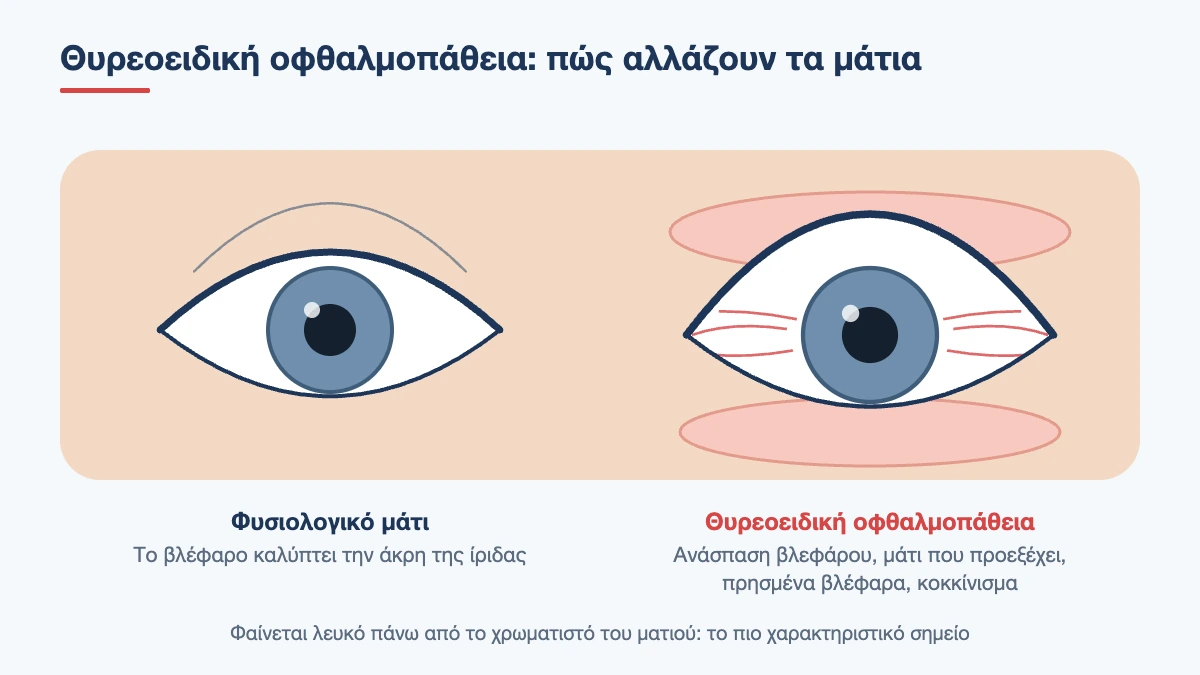
- Red eyes, mainly at the corners
- Puffy eyelids, worse in the morning
- A feeling of pressure behind the eyes
The characteristic signs
- Eyelid retraction. The upper eyelid sits higher than normal and white shows above the coloured part of the eye. The gaze looks surprised or “staring”. This is the most common and most specific sign
- Proptosis (exophthalmos). The eyes bulge forwards, often unevenly. Patients notice it in photographs, or family and friends point it out
- Incomplete closure of the eyes during sleep, with irritation in the morning
- Double vision. The swollen muscles do not stretch properly, and the eyes do not move together. At first it appears only on waking or when looking up and to the side
- Pain on eye movement
The warning signs
In a few patients, about 3 to 5 in 100, the condition threatens sight in two ways. The first is pressure on the optic nerve from the enlarged muscles. The second is damage to the cornea, when the eye protrudes so much that the eyelids cannot cover it. Ask to be examined the same day if you notice:
- blurred vision that does not clear with blinking
- colours that look washed out, especially red
- dark areas in your field of vision
- severe eye pain or a white spot on the cornea
- an eye that does not close at all
- a sudden worsening of double vision or of how far the eye protrudes
Optic nerve compression can happen even without marked bulging, which is why the appearance of the eyes is not a reliable guide.
The Two Phases of the Disease
Thyroid eye disease follows a predictable course, and knowing it helps you understand why some treatments are given early and others later.
- Active phase: usually lasts 6 to 24 months. There is inflammation, symptoms change from week to week and may get worse. The eyes are red, swollen and painful. This is when anti-inflammatory medicines work
- Inactive phase: the inflammation burns out and the condition stabilises. Redness and pain settle, but whatever remains, such as bulging, eyelid retraction or double vision, no longer changes with medication, because the tissues have been replaced by scar tissue. This is where surgical rehabilitation has its place
In most patients with mild disease, symptoms improve noticeably on their own as the active phase passes.
What Makes It Worse
- Smoking. This is the strongest factor you can change. Smokers have a several-fold higher risk of developing eye disease, a more severe course and a poorer response to treatment. The benefit of stopping shows within months. This also applies to passive smoking
- Poorly controlled thyroid hormones, both hyperthyroidism and the hypothyroidism that may follow treatment
- Radioactive iodine treatment, which makes the eyes worse in some patients. When it is chosen, it is often combined with preventive steroids, and the endocrinologist works with the ophthalmologist before the decision is made
- High antibody levels and high cholesterol
Diagnosis
The diagnosis is mainly clinical. During the eye examination we:
- measure the position of the eyelids and how far the eyes protrude, in millimetres, with a special instrument, so there is a figure to compare with in future
- score the activity of the inflammation on a seven-point scale that includes pain, redness and swelling. The score shows whether the disease is active and whether it will benefit from anti-inflammatory treatment
- check eye movements and double vision
- examine the cornea with a dye for dry or damaged areas
- measure the eye pressure, which often rises when looking upwards
- assess optic nerve function with visual acuity, colour vision, pupil reactions, visual field testing and OCT
Blood tests include thyroid hormones and antibodies. A CT or MRI scan of the orbits shows the thickness of the muscles and whether the optic nerve is under pressure, and it is essential when the picture is asymmetrical or affects only one eye, to rule out other causes.
Treatment of Thyroid Eye Disease
Treatment is coordinated between the ophthalmologist and the endocrinologist and depends on two things: how severe the condition is and whether it is in the active phase.
For all patients
- Thyroid control and keeping hormone levels stable
- Stopping smoking
- Preservative-free artificial tears frequently during the day, and a gel or ointment at night
- Sleeping with your head raised, on two pillows, to reduce morning swelling
- Taping the eyelids closed or using a sleep mask if the eyes stay half open
- Wraparound sunglasses against light and wind
- Prism lenses in your glasses for double vision
Mild active disease
In addition to the above, a European study showed that taking selenium for six months improves symptoms and reduces the chance of worsening in mild forms. It is given on medical advice, at the specific dose and for the specific duration, and not indefinitely.
Moderate to severe active disease
The standard treatment is intravenous steroids, given as weekly infusions for about three months, in a hospital setting, with monitoring of the liver, blood sugar and blood pressure. It is more effective and safer than steroid tablets. It is often combined with an oral immunosuppressant. Low-dose orbital radiotherapy helps especially when double vision is the main problem. In recent years targeted biological therapies have also been used, which in studies significantly reduced bulging and double vision. Their availability and indications vary from country to country, and the choice is made in specialist centres.
When sight is threatened
Pressure on the optic nerve is treated urgently with high doses of intravenous steroids. If there is no response within 1 to 2 weeks, surgical orbital decompression is performed: part of the bony walls is removed to create space for the enlarged tissues.
Rehabilitative surgery in the inactive phase
Once the disease has been stable for at least six months and the thyroid is under control, whatever remains can be corrected. The operations are always done in a specific order, because each one affects the next:
- Orbital decompression, to reduce bulging
- Eye muscle surgery, for double vision
- Eyelid correction: lowering the retracted upper eyelid, raising the lower one and, finally, blepharoplasty for excess skin and fat
Not everyone needs every stage. Many patients only need eyelid correction.
The Psychological Burden
For many people, the change in the appearance of their face is the hardest part. A gaze that looks angry or frightened when you are not, photographs in which you do not recognise yourself, double vision that makes driving and work difficult: all of these affect confidence and mood. If you feel this way, say so. It is part of the condition, not an overreaction, the course for most people is towards improvement, and rehabilitative surgery gives very good results. Patient groups and psychological support help considerably.
I Have a Thyroid Condition. When Should I Have My Eyes Checked?
- When Graves’ disease is diagnosed: a baseline eye examination, even without symptoms, so there are reference measurements
- Before radioactive iodine treatment
- If dryness, swelling, a change in your gaze or double vision appear
- During the active phase: every 1 to 3 months, depending on severity
- Immediately: if you have blurred vision, a change in colour vision or severe pain
If you have simple hypothyroidism controlled with thyroxine, without autoimmune Graves’ disease, the chance of eye disease is low. Dry eye is, however, more common and is worth checking if it bothers you.
Book an Appointment
If you have a thyroid condition and your eyes are irritated, swollen or look different, or if your eyes bulge and you have never had your thyroid checked, an examination with precise measurements shows whether thyroid eye disease is present and which phase it is in. The clinic is in Neo Psychiko, Athens: call 210 677 0007 or use the contact form.
Frequently Asked Questions about Thyroid Eye Disease
Does everyone with a thyroid condition get eye problems?
No. Thyroid eye disease mainly affects people with Graves’ disease, and about 1 in 3 of them develops mild symptoms. About 1 in 20 has a severe form. In simple hypothyroidism it is rare.
Will my eyes go back to normal once my thyroid is under control?
Controlling your hormones is essential and helps, but the eyes follow their own course. In mild forms the symptoms largely settle within 1 to 2 years. Whatever remains can be corrected surgically.
Why is it so important to stop smoking?
Smoking multiplies the risk of thyroid eye disease, makes it more severe and reduces how well treatments work. It is the most important factor that depends on you, and the benefit of stopping shows within a few months.
Can thyroid eye disease cause blindness?
Rarely. In 3 to 5 in 100 patients the enlarged muscles press on the optic nerve or the cornea is left exposed. If this is treated promptly with steroids or decompression, sight is saved. That is why blurred vision and changes in colour vision need urgent examination.
I have double vision. Will it go away?
During the active phase double vision can change and may improve with treatment. In the meantime, prism lenses help. If it remains once the disease has stabilised, it is corrected with eye muscle surgery.
When can I have eyelid surgery?
When the disease has been inactive and stable for at least six months and your thyroid is under control. If orbital decompression or surgery for double vision is needed, these come first, and the eyelids are corrected last.
Is it worth taking selenium?
In mild, active forms, taking selenium for six months showed benefit in a European study. It should only be taken on medical advice and for a set period, because excessive intake has side effects.
Questions about your case?
Dr. Skouteris will examine you at his practice in Neo Psychiko and explain your options.

Ophthalmic surgeon trained at the John Radcliffe University Hospital in Oxford and Fellow of the European Board of Ophthalmology (FEBO).
Full profileRelated articles
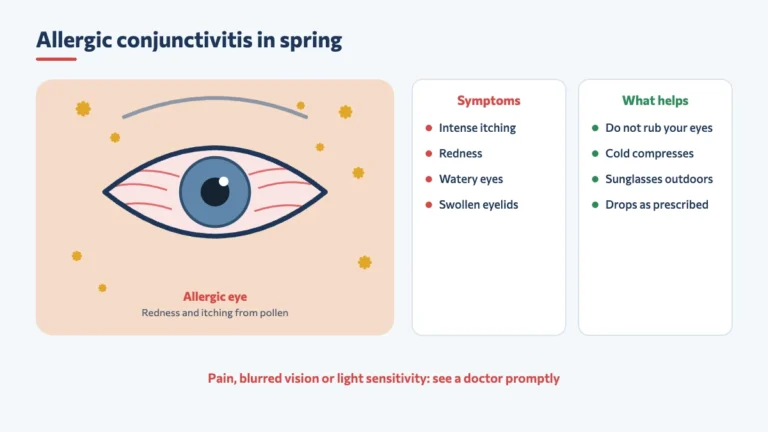
Allergic Conjunctivitis in Spring: Symptoms, Prevention and When to Worry
Itching, redness and watering in both eyes every spring? How to recognise allergic conjunctivitis, what helps prevent it and which signs need prompt examination.
Read the article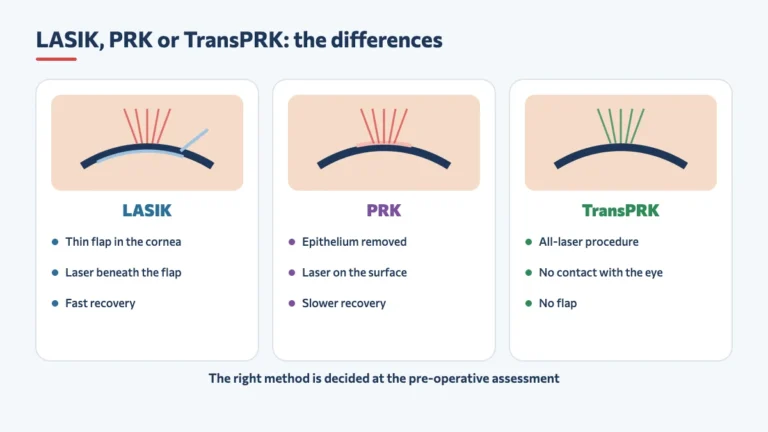
LASIK, PRK or TransPRK: Which Laser Eye Surgery Is Right for You?
The difference between LASIK, PRK and TransPRK, how long recovery takes and which criteria determine the right laser eye surgery for each eye.
Read the article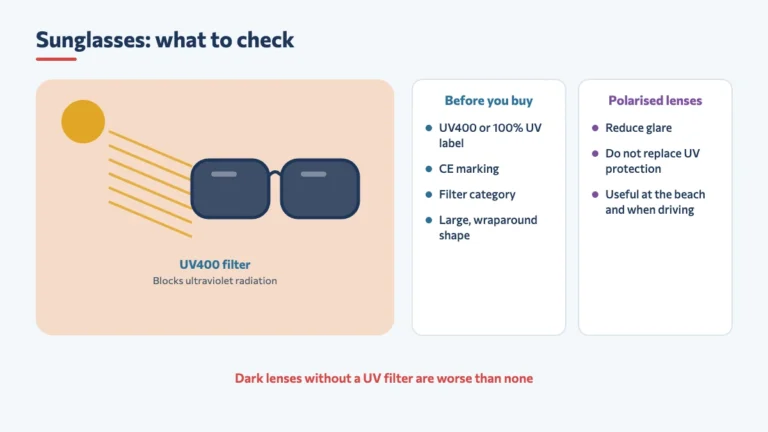
Sunglasses and Eye Protection: What to Check Before You Buy (Including for Children)
UV400, CE mark, filter category and polarised lenses: what to check before buying sunglasses for yourself and for your children.
Read the article